

Crown Jewel: Why Thorncrown Chapel is our Architectural Inspiration
When retired schoolteacher Jim Reed purchased a plot of land overlooking the Ozark Hills in 1971, he did not know it would soon be the site of one of the greatest marvels of modern architecture: Thorncrown Chapel.
Though the space was intended for a new home for Reed and his wife to enjoy in their retirement, the land seemed predestined to house the famed chapel; each day saw visitors drawn to the property for its magnificent views and inspiring natural surroundings. Fate or chance had set a clear path for Reed, and he soon commissioned architect E. Fay Jones to design his dream: a chapel where the floods of visitors could gather and reflect in the gentle calm of the woods.
Jones designed the stunning structure to echo the Prairie School of architecture largely popularized by his mentor, the illustrious Frank Lloyd Wright. The majority of the materials used in construction are indigenous to northwestern Arkansas. In addition to minimizing transportation costs and environmental impact, the use of natural materials helps the chapel mesh with its surroundings rather than competing with them. Jones insisted that “no structural element could be larger than what two men could carry through the woods,” a rule of thumb that guided the design process toward the principles of the Prairie School.

Glass panels dominate the sides of the chapel, allowing light to pour in from all angles and bathe the space in an ethereal glow. The clarity of the glass and seamless design are so utterly entrancing that when the lush greenery sways in the wind, you expect to feel the breeze within the chapel. Despite its distinctive presence and unforgettable design, the chapel does not impose itself on its surroundings. Thorncrown Chapel does not need to shout to assert its identity; it whispers, quiet but insistent, like the wind.
Close communication of architecture and landscape produces a design so reflective of its surroundings that it seems to have sprung from them naturally, an illusion strengthened by Jones’ use of natural, local materials. MMA Principal John S. MacDonald explains how this design plays into his admiration of the chapel: “The juxtaposition of clean geometric forms and transparency to the pristine natural setting creates a structure that transcends architecture in search of religion.” Architecture acting as a visual expression of natural elements is a core tenet of the Prairie School, which gravitates toward structures that go beyond merely serving the functional needs of their inhabitants—they express an idea.
This concept resonates deeply with our design philosophy at MMA. At every stage of the design process, we are acutely aware that we are not designing a house, but a home. The ideas these homes express, vary based on clients’ needs from family-friendly vacation homes to penthouse lofts showcasing curated art collections. But space to space, concept to concept, and person to person, the idea rings through: this is home.

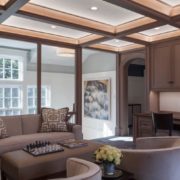
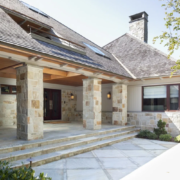
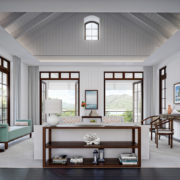
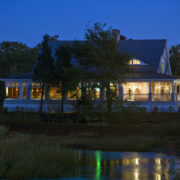
[Photo credit, top to bottom: Brad Holt, Jorge Chapa, Carol M. Highsmith.]


 Eileen Shields joined MMA in 1989 as Office Manager. During her more than 25 years with MMA, her position has evolved along with the growth of the firm. In addition to general office management, Eileen’s responsibilities also include bookkeeping, billing, accounts receivable, accounts payable, payroll, insurance, and human resource management.
 Kyle McCreight Carroll is a talented project designer who graduated with a Bachelor of Science in Environmental Studies from Oberlin College and received her Master of Architecture from Miami University.


 James Christopherson joined MMA in 2000 and brings diverse experiences in design and building construction expertise spanning more than 25 years. Among those are several years in the design of large-scale medical facilities, assisted care communities, and nursing homes. James has also practiced for several years as an independent architectural designer and visual communications consultant. He has designed private residences, condominiums, banks, libraries, and office buildings; additionally, he has produced major illustrations for many of the Boston areas’ most respected architecture firms.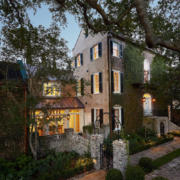
 John S. MacDonald, AIA, is principal and owner of Morehouse MacDonald and Associates, Inc. and has served in that capacity since 1988, directing the firm’s growth and management. John serves as Principal-in-Charge of each project and is responsible for setting overall design direction within the firm. His designs have appeared in numerous design and professional magazines such as Architectural Digest, Metropolitan Home, Better Homes & Gardens, House Beautiful, Boston Common, Cape Cod & Islands Home Magazine, Boston Magazine and Trends Magazine. In addition, John has appeared on the cable television channel HGTV discussing the firm’s architectural work and showcasing several key projects.
 Elizabeth Cameron joined Morehouse MacDonald and Associates as an interior designer in 2017, to help us with interior design projects in the Lesser Antilles. The Oklahoma native moved to Boston in 2012 to pursue a degree in Architectural Studies with a minor in Visual Arts from Boston University which she received in January of 2016. She also studied European architectural history in Venice during her education at Boston University. Elizabeth earned her Masters of Arts degree in Interior Architecture at Suffolk University in 2018.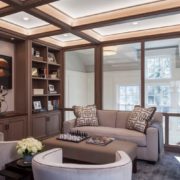
 Anthony M. Frausto-Robledo, AIA, LEED AP, has been with MMA since 1999. In 2018 he was promoted to associate principal and in 2025 to principal and partner.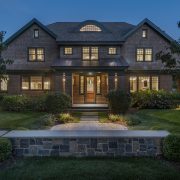
 Duncan Morton joined the MMA team as a Project Architect. He received a Bachelor’s degree in Mathematics from Bates College and a Master’s in Education from Boston College.